Jenny Montigny

COR00462 De Begonia's Jenny Montigny MSK Gent_© Martin Corlazzoli
Jenny Montigny (1875-1937) schildert met de kracht van het licht. Binnen het luminisme is haar oeuvre verrassend en eigenzinnig. Dat bewonder je vandaag in Antwerpen, Gent, Brussel en kunstenaarsdorp Deurle.

Eigenzinnig genie uit Gent

Jenny Montigny wordt geboren in de Gentse burgerij. Haar vader is advocaat en hoogleraar, haar moeder stamt uit een textielfamilie. Jenny besluit een andere weg in te slaan. Eén museumbezoek duwt haar leven in een andere richting. Wanneer ze oog in oog staat met het schilderij De ijsvogels van Emile Claus, besluit ze haar leven in het teken van de kunst te stellen. 

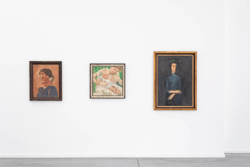
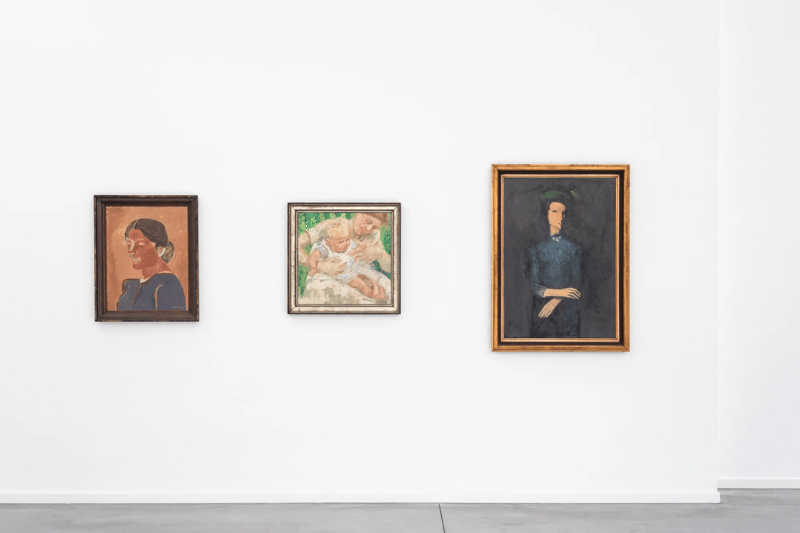
Zaalzicht  met o.a. Jenny Montigny, Moeder en kind, 1920-1926. Collectie Museum Dhont-Dhaenens. Foto Rik Vannevel
Zaalzicht met o. a. Jenny Montigny, Moeder en kind, 1920-1926. Collectie Museum Dhont-Dhaenens.

Een artistiek leven in Deurle

In de zomer van 1895 begint ze aan de weg te timmeren. Ze volgt schilderlessen in de openluchtklassen van Emile Claus, in Villa Zonneschijn in het plaatsje Astene. Aan het begin van de 20ste eeuw verhuist ze naar het kunstenaarsdorp in Deurle, waar ze een woning met atelier laat bouwen. Zo groeit Montigny uit tot schilder, pastellist, tekenaar en etser van topniveau. Ook sluit ze zich aan bij Vie et Lumière, een vereniging voor kunstschilders die het licht centraal stellen: de luministen.  

In dat kader ontwikkelt Montigny een geheel eigen stijl. Ze schildert het landelijke leven langs de Leie, intieme interieurs, moederschap en kindertijd. Tijdens de Eerste Wereldoorlog verblijft ze in Londen. Daar verkent ze andere onderwerpen. Ze toont het societyleven in de weelderige parken en portretteert gewonde Belgische soldaten. Na de oorlog keert ze terug naar Deurle. In 1922 volgt de kroon op haar carrière: een eerste overzichtstentoonstelling in haar geboortestad Gent. 

Jenny Montigny [1875-1937], De speelplaats, Koninklijke Musea voor Schone Kunsten van België, Brussel, foto Guy Cussac, Brussel_© KMSKB foto Guy Cussac Brussel
Kinderen spelen onder door de zon gefilterde bomen, terwijl gouden bladeren om hen heen neerdwarrelen en een levendige, nostalgische scène creëren. Op de achtergrond zijn een poort en een stenen muur zichtbaar.

Jenny Montigny in Vlaanderen

Je ontdekt het rijke oeuvre van Jenny Montigny in heel Vlaanderen.  

  • Museum Dhondt-Dhaenens in het kunstenaarsdorp Deurle bezit twee van haar werken: De school en Moeder en kind. Die duiken af en toe op in tijdelijke tentoonstellingen. Op het kerkhof Sint-Aldegondis in de Dorpsstraat bezoek je het graf van Jenny Montigny. In de Philippe de Dentergemlaan zie je de Sint-Jozefsschool, waar ze inspiratie vond voor haar schooltaferelen. 

Nooit ver weg ...

Vlaamse meesterwerken genieten wereldwijde faam. Sommige topwerken reizen soms tijdelijk de grenzen over voor tentoonstellingen in gerenommeerde buitenlandse musea. Of ze reizen doorheen Vlaanderen. Hoe dan ook, er valt altijd een schat aan meesterwerken te ontdekken: in onze musea, steden en erfgoedlocaties. Hier woonden en werkten de Vlaamse Meesters, hier vonden ze de inspiratie voor hun meesterwerken. 

Volg ons op @The Flemish Masters

This painting changed someone’s life forever.

You are looking at The Skaters by Emile Claus.

At the age of sixteen, Jenny Montigny reportedly stood in front of this painting at the Museum of Fine Arts Ghent. The encounter left such a lasting impression that it set her on the path to becoming an artist.

Now, more than a century after her major retrospective in Ghent in 1922, Montigny returns to mskgent.

From 10 October 2026, a major retrospective will bring together her intimate and luminous paintings...
A change of season 🍂

Summer is officially over, and autumn is here — bringing golden light, warm colours and that unmistakable feeling of change.

A feast for the eyes? Look no further than Autumn by Rik Wouters. Painted in 1913, this vibrant scene captures the season in all its colour and warmth.

Consider it an invitation to enjoy an autumn city break in Flanders. So grab your scarf, pack your suitcase and come discover an art-filled autumn. 🍁

Stay tuned for more Flemish art, exhibitions and inspirat...
After 14 years of painstaking work, the restoration of one of the most iconic masterpieces of late medieval art is nearing completion.

The Adoration of the Mystic Lamb — better known as the Ghent Altarpiece — is slowly revealing its full splendour, bringing us closer than ever to the extraordinary vision of Hubert and Jan van Eyck.

Now entering its final months, the restoration campaign offers a rare glimpse behind the scenes. Visitors can still see the experts of kikirpa.be at work in their studio at ...
🎒 Back to school — and into a luminous cultural autumn! ✨

What better painting to mark both moments than ‘The Village School’ by Jenny 
Montigny (1875–1937), one of Belgium’s remarkable female artists?

From October, the mskgent will present a major retrospective of her work — more than a century after Montigny organised her first retrospective in Ghent in 1922.

The connection with the museum is especially fitting: at just sixteen, Montigny reportedly visited the museum and was captivated by Emile Clau...
Let’s stick around at Museum hofvanbusleyden a little longer. And let’s turn the spotlight on a female master for a change. Yes, women were masters too! Although they often had to fight for their place.

Meet Maria Faydherbe (1587–1643), a sculptor born and working in Mechelen. She was so confident in her own abilities that she openly competed with her male colleagues. She petitioned to join the Guild of Saint Luke, but she was refused. Instead, she was forced to work in her family’s workshop, without be...
During the Burgundian-Habsburg period, Mechelen played an important role in the education and upbringing of Habsburg princesses. Mary of Hungary spent part of her childhood here and was raised and educated alongside other members of the dynasty.

Their stories offer a fascinating glimpse into the role of women in sixteenth-century European politics, diplomacy and dynastic power. 

There is no better place to discover this legacy than at Museum hofvanbusleyden in Mechelen.

A newly acquired portrait of a ...
Let’s stick around at Museum hofvanbusleyden a little longer. And let’s turn the spotlight on a female master for a change. Yes, women were masters too! Although they often had to fight for their place.

Meet Maria Faydherbe (1587–1643), a sculptor born and working in Mechelen. She was so confident in her own abilities that she openly competed with her male colleagues. She petitioned to join the Guild of Saint Luke, but she was refused. Instead, she was forced to work in her family’s workshop, without be...
A hidden Ensor painting has finally come to light. 👀🎨

A previously unknown painting by James Ensor has been acquired by the city of Ostend and is now on display at the Ensor House.

The recently rediscovered painting portrays Ensor's mother at the age of 65. In true Ensor fashion, it is anything but flattering. Displayed beneath the portrait of a young woman and titled Débris – French for "wreck" or "remains" – the work offers a bold reflection on vanity, beauty and the passing of time.

Even more remar...
Museum plantinmoretus in Antwerp is one of Europe's most remarkable UNESCO World Heritage Sites, where art, heritage and the history of printing come together.

Far more than a museum, it is the beautifully preserved home of the Plantin-Moretus family, where nine generations lived, worked and built one of Europe's most influential printing houses.

Within these historic walls, the first atlases, royal Bibles and groundbreaking scientific works were printed. Peter Paul Rubens, a close friend of the family...
☀️ Summer is in full swing, and there's no better way to enjoy it than by combining leisurely cycling with art and culture.

Make Ghent your base camp and set off on a scenic ride to Sint-Martens-Latem. The picturesque village on the banks of the River Lys that became home to one of Belgium's most influential artists' colonies around the turn of the 20th century.

Among its pioneers was Valerius De Saedeleer, one of Belgium's greatest landscape painters. Defying his father's wishes to pursue an artistic ...